
Enzyme Workshop for Organic Farming
Enzyme Workshop for Organic Farming
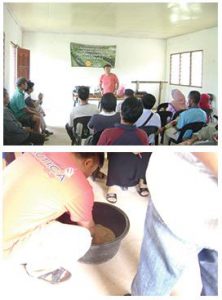
Borneo Ecotourism, Solution and Technologies (BEST) Society has successfully organised a workshop to teach making enzyme for organic farming in Kg Rampai Besar Community Hall, Kudat, Malaysia on 29th June 2013.
The half day workshop was conducted by trainer, Mr. Oh Sung Doh and attended by 19 participants including ten participants from Organic Farming Project sponsored by Shell and three teachers from SMK Sikuati 2. This workshop focused on the method used to prepare the enzyme at easy and low cost. The purpose of making enzyme is to help in the composting process of organic matter.
Mr. Oh himself was a farmer in South Korea and this technique was first discovered by his father after many years of research. During his workshop, he urged everybody to stop using pesticide and fertilizers to grow the vegetable as the chemical substance will accumulate through food chain and end up in human body. Both pesticides and chemical fertilizers will deteriote human health and unborn baby if consumed in a long term. Participants offered positive feedback regarding the newfound skill.
Career Talk for 25 Rural Students
Career Talk for 25 rural students
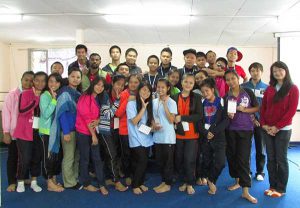
Borneo Ecotourism, Solution and Technologies (BEST) Society has successfully organised a workshop to teach making enzyme for organic farming in Kg Rampai Besar Community Hall, Kudat, Malaysia on 29th June 2013.The half day workshop was conducted by trainer, Mr. Oh Sung Doh and attended by 19 participants including ten participants from Organic Farming Project sponsored by Shell and three teachers from SMK Sikuati 2. This workshop focused on the method used to prepare the enzyme at easy and low cost. The purpose of making enzyme is to help in the composting process of organic matter.
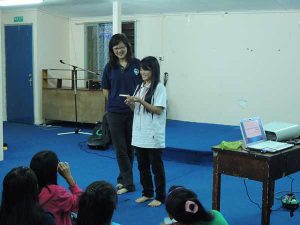 Mr. Oh himself was a farmer in South Korea and this technique was first discovered by his father after many years of research. During his workshop, he urged everybody to stop using pesticide and fertilizers to grow the vegetable as the chemical substance will accumulate through food chain and end up in human body. Both pesticides and chemical fertilizers will deteriote human health and unborn baby if consumed in a long term. Participants offered positive feedback regarding the newfound skill.
10 Farmers Visited Canaan Farm
10 farmers visited Canaan Farm
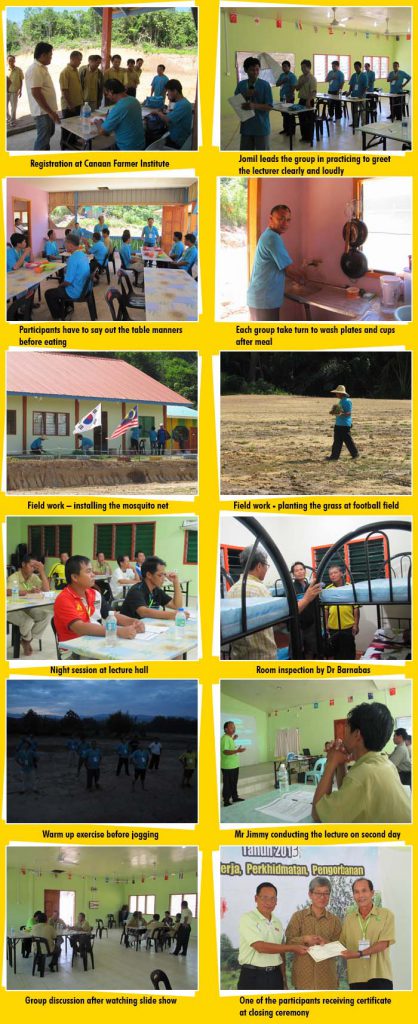
On 15th August, a total of 10 farmers from Kg Rampai, Besar, Sikuati along with two representatives from Borneo Ecotourism, Solutions and Technologies (BEST) Society went on a two days training program to Canaan Farmers Institute at Marak Parak, Kudat. The aim of this trip is to motivate, change their mindset and to develop leadership skills.At 7.00 am, the participants gathered at Sikuati town before driving to Canaan Farm and were greeted by Dr Barnabas Chai (headmaster of the institute) and his staff members in the opening ceremony.
In the introduction session, the participants were briefed by Mr Jimmy on house rules. After learning some basic Korean greetings, the participants were introduced to the history of the institute and its founder.
After lunch break, the participants were divided into three groups for field work. The first group was responsible to install the mosquito net at lecturer hall, second group to plant grass at the football field and the third group had the opportunity to learn operating a plowing machine.
At 7.00pm, the first session was handled by Dr Barnabas himself. He talked about the meaning of becoming pioneer and the important of pioneering spirit in our daily life. He explained how discipline can help to overcome hardship and guide each individual in term of spiritual, mental and physical. Dr Barnabas uses a lot of short video clips in his session. The first day ended with the room inspection headed by the headmaster.
The second day started as early as 5.15 am with morning exercise. According to the trainer, exercise helps to wake up the mind. After that, participants help to clean the rooms and the surrounding area in the institute before having breakfast at the canteen.
At 8.00 am, the participants headed to the lecture hall for the second and third session. Both sessions emphasized on the discipline needed in life to become successful and at the same time promote hard work and unity. The slideshow contains pictures of South Korea in the 50s after the World War 2 and civil war and South Korea today. In between the session, the participants had an interactive discussion with the lecturer based on the slideshow shown to them.
During the closing ceremony, all of the participants received certificates of participation from the headmaster. Dr Barnabas urged the participants to apply what they had learned here in their daily life and also welcome BEST Society to organize a longer trip as the current trip is too short.
At the end of the session, all the participants expressed that they learned something new in their life. They realize in order to move forward, they need to have the right mindset and positive thinking. They were very thankful to BEST Society for organizing this study trip.
This study trip was organized by BEST Society as part of the Organic Farming Project and funded under the Shell Sustainable Development Grants programme. The total expenses incurred for this trip were RM 2,935.50.
Educational Talk on Organic Farming
Educational Talk on Organic Farming
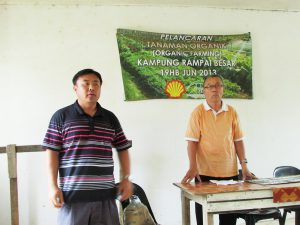 Borneo Ecotourism Solutions and Technologies (BEST) Society recently invited Mr Oh Jung Myun, an organic farming expert from the South Korea to give a talk to the farmers at Kg Rampai, Besar, Kudat, Malaysia on 11th December 2013.This talk is part of the program under the Organic Farming Project funded by the Shell Malaysia Sustainable Development Grant aimed at developing sustainable organic farming while promoting healthy diet and to generate higher income for the local Rungus communities in Kudat.
The workshop was opened by the Head of Village, Mr Mesigin Ongunjil before Mr Oh’s sharing begins. Mr Oh explained that the organic farming activities started in Korea after the Koreans were experiencing diseases originated from the intake of food, which was contaminated with excessive pesticides and herbicides. He added that during his early days, he faced numerous challenges while pioneering organic farming.
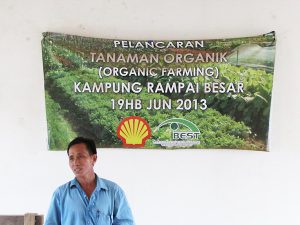 In the half-day workshop, the farmers were taught how to make the dead soil become healthy again by using enzyme. He also shared his knowledge on how to control the attack from insects and methods to protect the vegetable from wind and rain. He added that to become a successful organic farmer, hard work is the key ingredient.
The farmers found the talk was extremely useful. “This talk is very educational, as it taught us about the method for making the dead soil alive. I never heard of this method until today,” said John Ukong.
The talk ended at 12.30 pm after the questions & answers session. A total of RM 1,096.20 was spent for the talk, which included lunch for the participants and logistic expenditure.